

I visited BNI at Conrad Pune today, thanks to an invitation from Manish. At Saeloun, we build software for businesses around the world. I want to bring that engineering experience closer to home, to the shops, studios, and small businesses here in Pune.
I’m calling it Vipul’s AI: a free service to help small and medium businesses in Pune build and ship useful websites and apps.
Bring me something your business needs. It could be a better website, a way to track repairs, a product catalogue, or a simpler process for getting customer approvals. We’ll work out a useful first version and build towards it.
I want to make this India-first, starting here in Pune. And I want to show the actual work behind the offer.
A website that connects to the work behind the counter
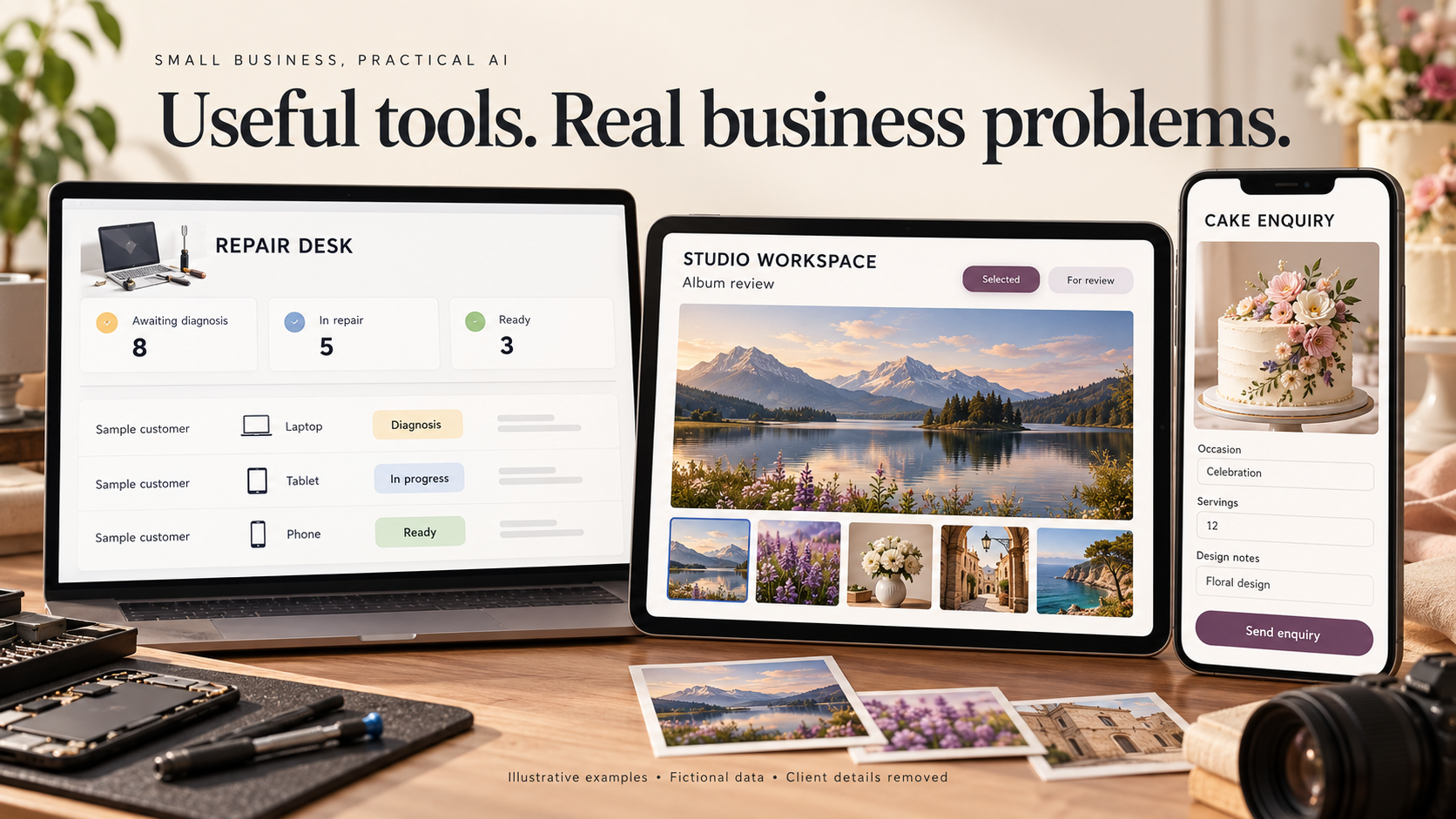
One recent build is for a local electronics retailer. The customer-facing part is a mobile-friendly website with a product catalogue based on the retailer’s own official material.
The more interesting part is the repair workflow behind it.
A device comes in. Someone records it, inspects it, prepares a quote, tracks the repair, checks the finished work, and hands it back. We built a CRM around those steps, with intake, inspection, quotations, repair quality checks, and status tracking.
That gives the business a concrete workflow to try. Can a person at the counter record a repair? Can someone else see what needs attention? Is the next step clear?
The Rails application is live, with sample data for reviewing the workflow. Some sign-in, email, and private file-storage integrations still need configuration. Those are part of the remaining work before calling the whole system ready for everyday customer use.
This is the kind of app I want to build more of: something specific enough that an owner can try it and tell us what needs to change.
A photography website with a preview of the next workflow
For a photography studio, we built a 13-page website with three design themes and light and dark modes. The public website is live.
There is also a working browser prototype for the interactions that come after a shoot: viewing a gallery, selecting favourites, choosing an album order, and approving proofs.
Those screens use fictional sample content and save their demonstration state locally in the browser. The secure private studio CRM is a separate second phase, currently in progress.
That distinction matters when showing the work. A gallery selection demo lets an owner test the flow and react to it. A private customer portal also needs access controls, storage, and the rest of the operational work before real customer photographs belong in it.
The website is shipped. The prototype helps us work out the next part with something people can click through.
A bakery website built from the right material
A third example is a bakery website built from product photographs.
The useful input was the product imagery. Personal material in the supplied presentation was excluded from the website. That is a small implementation detail with a much bigger lesson: access to a file should never mean every part of it ends up on the internet.
The site is built, the source is in a private repository, and all 12 tests passed. Deployment is still pending.
I’m including it because building and shipping have separate checkpoints. A finished build and a passing test suite are progress; a verified live website is another step we still need to complete.
How we’re building with Codex, Dots and gbrain
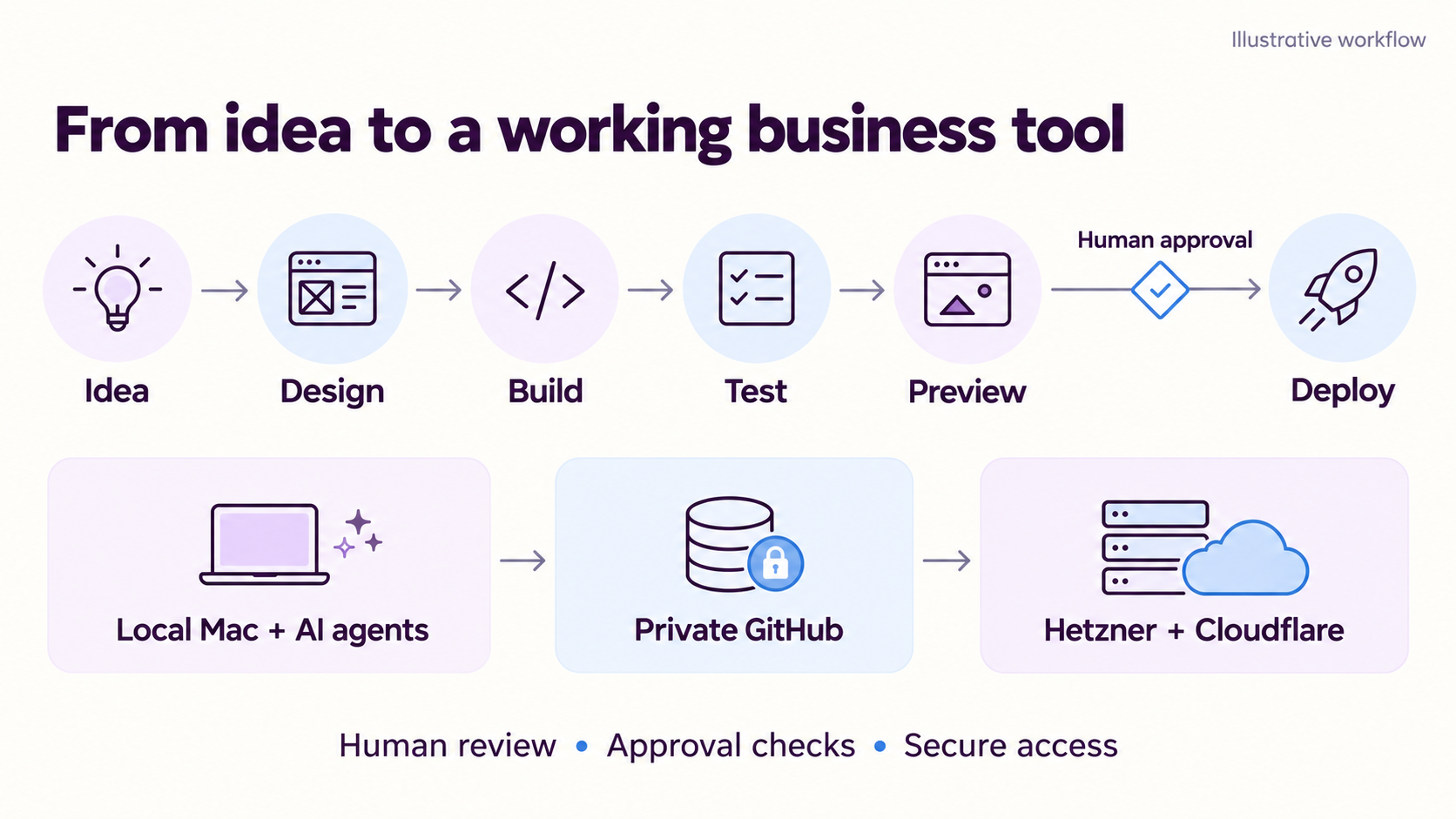
A conversation with a business owner gives us the starting point: what’s taking too much time, what’s getting lost, and what would make their day easier.
I use Dots to discuss those needs and coordinate the work. Codex helps turn the brief into working software: implementing features, reviewing changes, running tests and checking the browser experience. My gbrain knowledge setup helps carry relevant project context forward, so each iteration builds on the decisions we’ve already made.
The tools don’t remove the need for judgement. I still review the scope, check the result and decide what’s ready to ship.
We use private GitHub repositories, automated checks and browser testing, then deploy through our existing Hetzner and Cloudflare setup.
That’s what excites me about bringing this to Pune’s small businesses. A repair counter, photography studio or bakery should be able to explain a problem in everyday language and work with us towards something useful.
We’re starting with free, scoped projects and sharing what we learn, with client details kept private.
The bigger vision is Vipul’s AI: a simpler way for Indian businesses to get useful software built and maintained. We’re building towards that, one real project at a time.
Starting with one useful problem
The offer is to build and ship a custom website or app for your Pune business for free, with the first useful scope agreed together.
You don’t need to arrive with a technical specification. Explain what happens today, show the material you already have, and tell me where the process gets difficult. A shop might need a repair tracker. A studio might need a better approval flow. Another business might simply need a website it is happy to send customers to.
We should also be clear about the practical details for each build, including any outside services it depends on and what keeping it running will involve. Those belong in the conversation early.
The examples here are anonymised because the workflows are useful to share without exposing the businesses or their customers. The same care applies to what goes into the software itself.
If you run a small or medium business in Pune, email me at [email protected] with a short description of your business and one thing you’d like to make easier.
Let’s build that first useful version.


